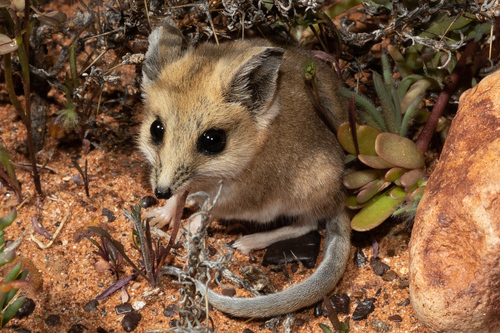
Unveiling the Fat-Tailed Dunnart: Australia's Tiny Carnivorous Marvel
In the vast and diverse landscapes of Australia, where unique wildlife thrives, one small but mighty marsupial often goes unnoticed: the Fat-Tailed Dunnart (Sminthopsis crassicaudata). This fascinating creature, a true native, is a testament to nature's ingenuity, embodying a remarkable suite of adaptations for survival in harsh environments. Despite its mouse-like appearance, it is crucial to understand that the Fat-Tailed Dunnart is a distinct species, a carnivorous marsupial, and certainly not a pest to be confused with common house mice. It plays an invaluable role in its ecosystem, a tiny predator with a secret weapon – its tail.
With a head and body length typically ranging from 60-90mm and a tail that adds another 45-70mm, this diminutive carnivore weighs in at a mere 10-20 grams. Yet, within its small frame lies a fierce survivor, perfectly adapted to its nocturnal life. Its large black eyes, prominent ears, and pointed snout are all tools finely tuned for hunting the invertebrates that form its primary diet. But it's the dunnart's unique tail that truly sets it apart, a critical fat-storage organ that serves as its lifeline during lean times. To delve deeper into the wonders of its unique adaptations, explore The Fat-Tailed Dunnart: Australia's Tiny, Tail-Storing Marsupial.
A Closer Look: Physical Characteristics
The visual characteristics of the Fat-Tailed Dunnart are a masterclass in camouflage and functional design. Its upper body typically displays a fawn to brownish-grey pelage, providing excellent concealment within its natural surroundings. Darker patches often accent the areas around its eyes and head, perhaps aiding in breaking up its silhouette, while some individuals exhibit charming white crescent-shaped patches around their ears. The underside and legs usually present a lighter grey to white coloration, completing its subtle, natural palette.
However, the most striking feature, and indeed the source of its common name, is its tail. When the dunnart is in optimum condition, with ample food reserves, its tail becomes conspicuously swollen and carrot-shaped, indicating a healthy store of body fat. This remarkable adaptation is not merely aesthetic; it's a vital survival mechanism. As food becomes scarce, the dunnart metabolizes these fat reserves, causing its tail to thin. This visible indicator of its nutritional status is a direct reflection of its resilience and ability to endure periods of food scarcity – a crucial trait for a small marsupial living in often unpredictable environments.
Mastering Survival: Diet and Unique Adaptations
As a carnivorous marsupial, the Fat-Tailed Dunnart occupies an important niche in its ecosystem as a nocturnal predator. Its keen senses and agile movements make it an effective hunter of small invertebrates. Its diet primarily consists of beetles, spiders, slaters, worms, and slugs. This natural predation helps to control insect populations and contributes to the overall health of its habitat.
Beyond its dietary preferences, the dunnart possesses several extraordinary physiological adaptations that ensure its survival, particularly in arid and semi-arid regions:
- Moisture from Prey: Unlike many mammals that require free water sources, the Fat-Tailed Dunnart obtains sufficient moisture directly from its invertebrate prey. This remarkable ability allows it to thrive in environments where standing water is scarce or nonexistent, reducing its dependency on external water sources.
- Torpor: During cooler months or periods of extreme food shortage, the dunnart can enter a state of torpor. Similar to a short-term hibernation, torpor allows the animal to significantly reduce its metabolic rate, heart rate, and body temperature. This dramatic energy conservation strategy minimizes the demand on its fat reserves, particularly those stored in its tail, enabling it to endure challenging conditions until food becomes more abundant. The ability to switch between active hunting and energy-saving torpor is a testament to its highly evolved survival mechanisms.
Home Sweet Home: Habitat and Distribution
The Fat-Tailed Dunnart is arguably the most widely distributed dunnart species across Australia, a testament to its incredible adaptability. Its presence spans a vast geographical range, including New South Wales, South Australia, Queensland, Western Australia, and the Northern Territory. Within this broad distribution, two distinct subspecies have been identified:
- Sminthopsis crassicaudata centralis: Primarily found in the more northern arid regions of Australia, adapted to harsher, drier conditions.
- Sminthopsis crassicaudata crassicaudata: Concentrated in the southern parts of the continent, with its presence in Victoria limited to the western part of the state, generally west of the Hume Highway. Significant concentrations are observed on the unique Victorian Volcanic Plains.
This resilient marsupial occupies a diverse array of open habitats, showcasing its flexibility in environmental preferences. These include open woodlands, low shrublands, and arid shrublands. Perhaps most remarkably, populations can also be found coexisting with human activity in agricultural lands, utilizing unimproved pastures, old hay sheds, and finding refuge among rock piles and old logs. This willingness to inhabit modified landscapes highlights its robust nature, though it also brings it into closer contact with potential human-induced threats. For more details on its varied living spaces, check out From Deserts to Farms: The Fat-Tailed Dunnart's Diverse Homes.
A particularly favored habitat, especially on the Victorian Volcanic Plains, consists of cracking clay soils. These soils provide ideal conditions for the dunnart, offering natural crevices and burrows for shelter from predators and extreme weather. Furthermore, these environments often teem with the small invertebrates that form the bulk of its diet, ensuring a reliable food supply. The intricate network of cracks and fissures provides both protection and productive foraging grounds, making these areas prime real estate for the discerning dunnart.
Life Cycle and Conservation: A Delicate Balance
The life cycle of the Fat-Tailed Dunnart is characterized by a relatively rapid pace, common among small marsupials. Females are polyestrous, meaning they can breed multiple times within a season, typically from July to February. After a gestation period of just 13-16 days, litters of up to 10 tiny young are born and develop within the mother's pouch. They remain in the pouch for a period before dispersing around 65-69 days of age. Sexual maturity is reached quite swiftly, around 155 days for females and 159 days for males, though their average lifespan is relatively short, usually about 15-18 months.
Globally, the Fat-Tailed Dunnart is currently assessed as "Least Concern" by the IUCN due to its wide distribution and stable populations across much of its range. However, this global assessment can mask regional vulnerabilities. In areas like Victoria, where its habitat is more fragmented and susceptible to human impacts, local populations face significant threats:
- Habitat Fragmentation: Agricultural expansion and urban development lead to the isolation of dunnart populations, reducing genetic diversity and increasing their vulnerability.
- Competition with Introduced Species: Non-native species like house mice and rabbits can compete with dunnarts for food and shelter, placing additional pressure on their resources.
- Predation by Feral Animals: Introduced predators such as feral cats and foxes pose a significant threat. These efficient hunters can decimate small, ground-dwelling native populations, especially when natural cover is sparse.
Practical Conservation Tips for Landowners:
If you live in an area where Fat-Tailed Dunnarts are known to exist, there are simple yet impactful steps you can take to help protect these beneficial native marsupials:- Retain Natural Features: Protect existing rock piles, fallen logs, and areas of natural shrubland, as these provide crucial shelter and foraging grounds.
- Control Feral Predators: Support initiatives to control feral cats and foxes, and ensure your own pets are kept contained, especially at night.
- Minimize Pesticide Use: Reduce or eliminate the use of broad-spectrum pesticides that can harm the invertebrate prey that dunnarts rely on.
- Promote Native Vegetation: Plant native shrubs and grasses that create a healthier ecosystem for dunnarts and their food sources.
- Educate Others: Help spread awareness that these tiny marsupials are not pests but valuable components of Australia's unique wildlife.
Conclusion
The Fat-Tailed Dunnart is far more than just a small, mouse-like creature; it is a master of adaptation, a resilient survivor, and an integral part of Australia's intricate ecosystems. From its unique fat-storing tail and moisture-efficient diet to its ability to enter torpor, every aspect of its biology speaks to its remarkable capacity to thrive in challenging conditions. While globally secure, understanding and addressing regional threats are vital for ensuring the continued survival of this tiny carnivorous marvel. By appreciating its distinct identity, unique adaptations, and ecological importance, we can all contribute to safeguarding the future of the Fat-Tailed Dunnart and the incredible biodiversity of the Australian continent.