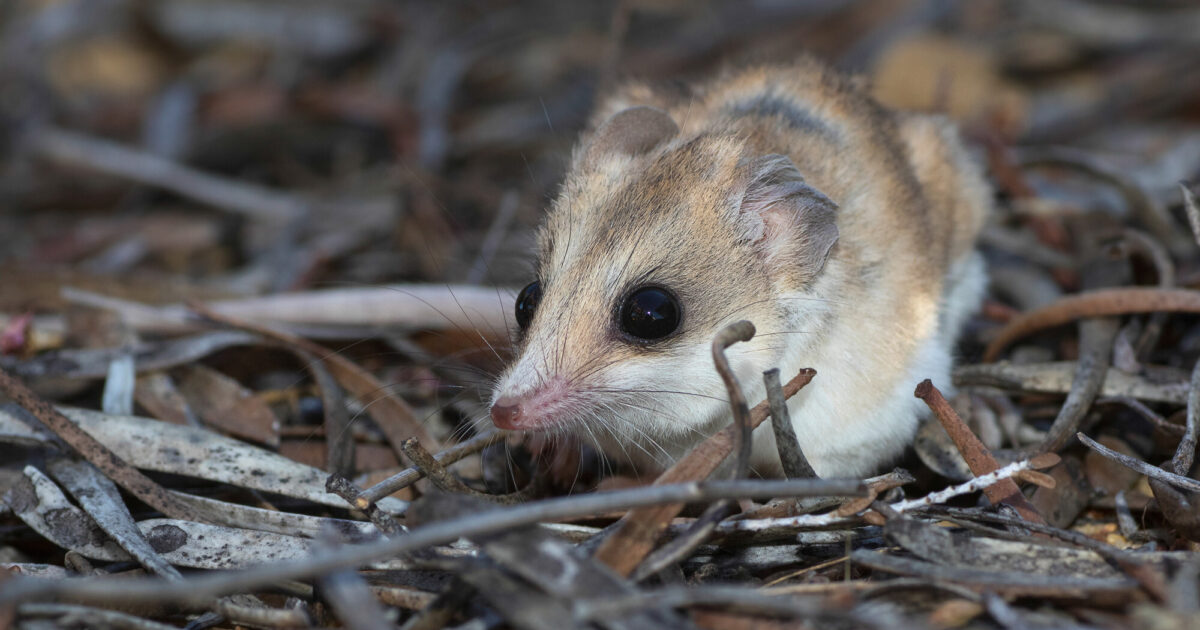
Australia is a land brimming with unique wildlife, and among its many fascinating inhabitants is the diminutive yet resilient Fat Tailed Dunnart (Sminthopsis crassicaudata). Often mistaken for a common house mouse due to its size and appearance, this native marsupial is, in fact, a crucial part of Australia's delicate ecosystem and deserves far more recognition. From the vast, arid deserts to the unexpected shelter of agricultural lands, this tiny creature showcases incredible adaptability and a unique survival strategy, epitomized by its most distinctive feature: its tail.
Far from being a pest, the Fat Tailed Dunnart is a fascinating example of evolutionary success, thriving across a diverse range of environments. With a head and body length typically between 60-90mm and a tail stretching 45-70mm, this small carnivore weighs a mere 10-20 grams. Despite its small stature, its impact on controlling invertebrate populations is significant. Let's delve deeper into the world of this extraordinary marsupial, exploring its physical traits, widespread habitats, survival instincts, and the critical role it plays in the Australian landscape.
The Unique Anatomy of a Desert Survivor
At first glance, the Fat Tailed Dunnart might indeed evoke comparisons to a mouse, but a closer look reveals its distinct marsupial characteristics. Its delicate frame features large, prominent black eyes that are perfectly adapted for its nocturnal lifestyle, complemented by equally large ears that can detect the faintest rustle of prey. A pointed snout aids in sniffing out insects hidden beneath the soil or in crevices. The upper body typically boasts a fawn to brownish-grey pelage, often accentuated by darker patches around the eyes and head, lending it a subtle camouflage. Some individuals even display charming white crescent-shaped patches around their ears, while their undersides and legs are usually a lighter grey to white.
However, the most defining feature, and the one that gives this species its common name, is its tail. When the dunnart is in optimum condition, with ample food reserves, its tail becomes conspicuously fat and carrot-shaped. This isn't just a quirky aesthetic; it's a vital survival mechanism. The tail serves as a natural larder, storing body fat that can be metabolized during periods of food scarcity, such as harsh winters or prolonged droughts. This ingenious adaptation highlights the dunnart's profound ability to endure in challenging environments. As food becomes scarce, the tail will gradually thin, indicating the animal is drawing upon its stored energy. To learn more about their incredible survival mechanisms, explore Fat-Tailed Dunnart: How This Carnivorous Marsupial Survives.
A Wide-Ranging Resident: Understanding Their Diverse Habitats
The Fat Tailed Dunnart holds the distinction of being the most widely distributed dunnart species across Australia, a testament to its remarkable adaptability. Its presence spans a significant portion of the continent, including New South Wales, South Australia, Queensland, Western Australia, and the Northern Territory. This broad distribution is further refined into two recognized subspecies:
- Sminthopsis crassicaudata centralis: Primarily found in the more northern arid regions of Australia, adapted to the extreme conditions of the outback.
- Sminthopsis crassicaudata crassicaudata: Distributed in the southern parts of its range, including a specific presence in western Victoria, generally west of the Hume Highway. In Victoria, significant concentrations are observed on the unique Victorian Volcanic Plains.
The habitats favored by these agile marsupials are as diverse as their distribution. They thrive in a variety of open environments, including open woodlands, low shrublands, and arid shrublands. What truly underscores their adaptability, however, is their ability to inhabit areas of agricultural land. You might find them in unimproved pastures, sheltering amongst rock piles, within old logs, or even taking refuge in disused hay sheds. This shows that the line between 'wild' and 'human-modified' landscapes is not always a barrier for resilient species like the dunnart.
A common thread among their preferred dwelling places, particularly on the Victorian Volcanic Plains, is the presence of cracking clay soils. These soil types are crucial as they provide natural fissures and cracks, offering perfect shelter from predators and the elements, as well as prime foraging grounds where invertebrates might hide. This unique preference illustrates how specific geological features can significantly influence the presence and success of a species, enabling them to transition seamlessly from deserts to farms.
Nocturnal Hunter: Diet, Survival Strategies, and Reproduction
As a nocturnal creature, the Fat Tailed Dunnart emerges under the cloak of darkness, embarking on its nightly hunt for sustenance. Its diet consists predominantly of small invertebrates, making it an essential predator in its ecosystem. A typical meal might include a diverse array of insects and other small critters such as beetles, spiders, slaters, worms, and slugs. This insectivorous diet not only sustains the dunnart but also helps to regulate invertebrate populations, contributing to ecological balance.
Mastering Survival
Beyond its fat-storing tail, the Fat Tailed Dunnart employs several other ingenious survival strategies:
- Moisture from Prey: They are so efficient at extracting moisture from their invertebrate prey that they often do not need to drink free water, a critical adaptation in arid environments.
- Torpor: During cooler months or periods of extreme food scarcity, dunnarts can enter a state of torpor. This controlled reduction in metabolic rate conserves energy, allowing them to endure harsh conditions until more favorable times return.
The Cycle of Life
Reproduction for the Fat Tailed Dunnart is a fascinating process. Females are polyestrous, meaning they can have multiple breeding cycles within a season, typically from July to February. Gestation is remarkably short, lasting only 13-16 days, after which a litter of up to 10 tiny young is born. These undeveloped offspring then make their way to the mother's pouch, where they continue their development. They remain in the pouch for a period before dispersing at around 65-69 days old. Sexual maturity is reached relatively quickly, at approximately 155 days for females and 159 days for males. Despite their reproductive efficiency, their average lifespan is relatively short, typically around 15-18 months in the wild.
Conservation Concerns and How We Can Help
Globally, the Fat Tailed Dunnart is assessed as "Least Concern" by the IUCN (International Union for Conservation of Nature). This classification is largely due to its wide distribution and generally stable populations across much of its range. However, this global assessment doesn't tell the full story, especially at a regional level. In certain areas, particularly in Victoria, the species faces significant vulnerabilities that warrant local conservation efforts.
Regional Threats Include:
- Habitat Fragmentation: As agricultural and urban development expands, the dunnart's habitat becomes increasingly fragmented, isolating populations and reducing genetic diversity.
- Competition with Introduced Species: Introduced rodents like house mice and rats compete with dunnarts for food resources, and larger introduced species can disrupt their environment.
- Predation by Feral Animals: Feral cats and foxes pose a severe threat, as these efficient predators can decimate dunnart populations, especially in fragmented habitats where natural cover is scarce.
How You Can Contribute to Their Survival:
Protecting these small but vital marsupials requires a community effort. Here are some practical ways to help:
- Responsible Pet Ownership: Keep domestic cats indoors, especially at night, or ensure they are confined to cat-safe enclosures. Even well-fed cats can hunt native wildlife.
- Support Habitat Conservation: Advocate for and support organizations working to protect and restore natural habitats, particularly in areas like the Victorian Volcanic Plains.
- Mindful Land Management: If you own land in dunnart habitats, consider retaining or creating areas of unimproved pasture, rock piles, and old logs, which provide crucial shelter and foraging grounds. Minimise the use of pesticides that can harm their invertebrate food source.
- Education and Awareness: Help dispel the misconception that dunnarts are pests. Educate friends, family, and local communities about the importance of these unique marsupials.
- Report Sightings: If you live in an area where dunnarts are found, reporting sightings to local wildlife authorities or through platforms like iNaturalist can help researchers better understand their populations and distribution.
For a deeper dive into their unique adaptations, explore The Fat-Tailed Dunnart: Australia's Tiny, Tail-Storing Marsupial.
The Fat Tailed Dunnart is a remarkable example of nature's ingenuity, a tiny survivor thriving against the odds across Australia's diverse landscapes. From its distinctive fat tail, a testament to its resilience, to its crucial role as a nocturnal invertebrate hunter, this marsupial deserves our admiration and protection. By understanding its unique biology, appreciating its varied habitats, and taking proactive steps to mitigate threats, we can ensure that this extraordinary creature continues to hop from deserts to farms for generations to come, enriching Australia's unparalleled biodiversity.